Why Journal Prompts Work Better Than Budgets for Financial Goals
Most financial advice focuses on the mechanics: track your spending, automate your savings, max your 401(k). The mechanics aren't wrong. But they're not the whole story.
The bigger obstacle for most professionals isn't knowing what to do — it's the layer underneath. The beliefs about money you absorbed before you were old enough to question them. The emotional relationship with spending that no spreadsheet can address. The way your income identity ("I make good money, so I must be fine") masks the fact that you have almost nothing saved.
Journal prompts for financial goals don't replace the mechanics. They work in parallel: surfacing what's actually driving your financial behavior so the mechanics can actually stick.
The 50 prompts below are organized by theme. You don't need to answer them all at once. Pick one section, sit with it for a week, and see what comes up.
Section 1: Your Money Story
Where you are financially didn't start when you got your first paycheck. It started much earlier. These prompts help you trace the origin of your current relationship with money.
- What's the earliest memory you have involving money? What did you learn from it?
- How did your parents talk about money when you were growing up? What messages did you absorb?
- Was money a source of stress, security, or conflict in your childhood home?
- What did your family believe about wealthy people? About debt? About spending on "nice things"?
- What financial decisions have you made that you're still carrying some shame or regret about?
- If you could go back and give your 22-year-old self one piece of financial advice, what would it be?
- What money beliefs did you inherit that you want to keep? Which ones do you want to release?
- What does "financial success" mean to you — as opposed to what your parents or society told you it should mean?
Section 2: Your Current Financial Reality
Honest self-assessment is the foundation of any real financial goal. These prompts help you see clearly — without judgment.
- If you had to describe your financial situation in three words right now, what would they be?
- What is your relationship with your bank account? Do you check it regularly, avoid it, or feel anxious when you look?
- Where does most of your money actually go each month? Not where you think it goes — where does it actually go?
- What financial area of your life do you most frequently avoid looking at honestly?
- If your spending habits reflected your stated values, what would need to change?
- What financial milestone are you most proud of reaching so far?
- What's the financial gap between where you are and where you thought you'd be by now? What happened?
- What does your financial safety net look like right now? Does it feel adequate?
Section 3: Your Financial Goals
Vague goals produce vague results. These prompts push you to get specific about what you actually want and why it matters.
- What does financial freedom mean to you, specifically? Not "not worrying about money" — what does it actually look like day-to-day?
- What number in your savings account would make you feel genuinely secure? Where does that number come from?
- What financial goal, if you achieved it in the next 12 months, would have the biggest impact on your daily quality of life?
- Are your financial goals actually yours, or are they benchmarks you've absorbed from peers, social media, or family expectations?
- What would change in your life if you had an additional $1,000/month of passive income?
- What are you willing to give up or delay to reach your most important financial goal?
- What do you want your finances to look like in 5 years? In 10?
- What financial goal have you been putting off "until things stabilize"? What would it take to start now?
Section 4: Money Mindset and Beliefs
Your beliefs about money operate as silent filters on every financial decision you make. These prompts bring them into the light.
- Do you believe you deserve to be wealthy? Really sit with that question before answering.
- When you imagine being significantly wealthier than you are now, what emotions come up?
- What stories do you tell yourself about why you haven't reached your financial goals yet?
- What would a person with a healthy relationship with money do differently than you do today?
- Do you think of money primarily as a tool, a scorecard, a source of security, or something else?
- How does your identity tie into your income level? What would change about how you see yourself if you earned significantly more — or less?
- What's your honest relationship with financial risk? How much of it is reasoned caution vs. fear?
- Where do you feel envy or resentment around others' financial success? What does that tell you?
Section 5: Income, Earning, and Side Income
For many professionals, the real leverage isn't in spending less — it's in earning more. These prompts help you explore your relationship with income.
- What do you believe determines your income ceiling? Is that belief actually true?
- Have you ever been underpaid relative to your value? What stopped you from asking for more?
- If you couldn't rely solely on your salary for income, what would you do? What does your answer tell you?
- What professional knowledge or expertise do you have that you've never thought to monetize?
- What would you need to believe about yourself to build a second income stream?
- What's the smallest step you could take in the next 30 days toward earning income outside of your job?
- What would you do with an extra $500/month? $2,000/month? $5,000/month? Notice how your answers differ.
- What's the difference between the way you think about your salary (trading time for money) and the way you think about passive income? Why does one feel more legitimate than the other?
If you're exploring the idea of income from your professional knowledge, this article on turning skills into digital products is a practical starting point. And if you're wondering what type of income is actually worth building, side income vs. side hustle explains the difference.
Section 6: Financial Habits and Systems
Goals without systems stay goals. These prompts help you examine the gap between intention and behavior.
- What financial habits do you currently have that are actually working?
- What's the one financial habit you know you should build but keep deferring?
- How do you currently make financial decisions? Instinctively, methodically, emotionally, or by avoidance?
- What would your finances look like if your past-self had made different decisions 5 years ago? What does that tell you about the decisions you're making today?
- What financial system or tool have you tried that didn't work? What was actually in the way?
- What would a financial review look like if you did it monthly? What would you look at?
Section 7: Wealth, Meaning, and Enough
The most important financial question isn't "how much can I accumulate?" It's "what is this for?" These prompts help you connect your financial goals to what actually matters.
- What does "enough" mean to you? How do you know when you've reached it?
- What experiences, relationships, or freedoms do you want money to fund — not things to own, but ways you want to live?
- What financial decision in the last year most reflected your values? What decision most contradicted them?
- If you knew you would reach your financial goals, what would you stop worrying about? What would you start doing?
How to Actually Use These Prompts
A few practical notes on getting real value from journaling about money:
Don't answer in bullet points. The value of journaling is in the exploration. Write in full sentences, follow tangents, contradict yourself. The insight usually lives in the thing you didn't plan to write.
Revisit the same prompts over time. Your answer to "what does financial freedom mean to you?" at 35 is different from your answer at 45. The change in your answers is data.
Don't skip the uncomfortable ones. The prompts that make you squirm or want to move on quickly are usually the most useful. Sit with those longer.
Pair journaling with action. Reflection without action is just venting. After each journaling session, identify one concrete step you can take in the next week based on what came up.
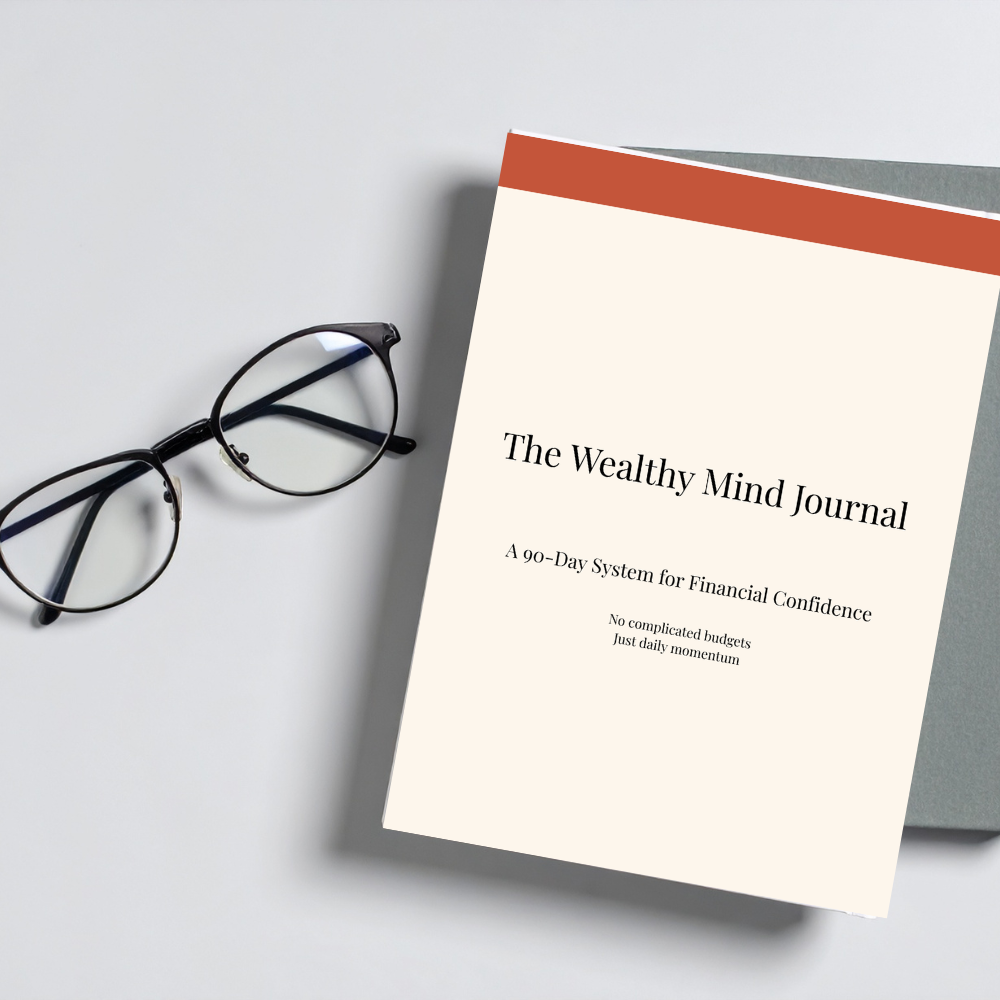
A journaling system built specifically for financial growth
The Wealthy Mind Journal pairs structured journaling prompts with proven money mindset frameworks — designed for professionals who want to change how they think about wealth, not just how they track it. 90 days of guided reflection, financial goal-setting, and habit building.
Get The Wealthy Mind Journal — $19
Free Tips
Get free tips on building side income
Practical strategies for busy professionals who want to earn more — delivered straight to your inbox.
Explore the full SideShelf collection
Browse All Products