The Problem Isn't Your Income. It's What You Believe About It.
Most financial advice skips the part that actually matters. The budgets. The investment strategies. The compound interest charts. All of it assumes you're already thinking about money the right way.
Most people aren't.
What holds most professionals back from building real wealth isn't lack of income or lack of knowledge. It's a set of deeply ingrained beliefs about money that run quietly in the background, shaping every financial decision they make without ever being examined.
Here are five shifts that change everything.
1. From "Earning More" to "Keeping More"
The first money mindset most professionals carry: if I just earned more, I'd finally get ahead.
It's not true. And the data backs this up — most people who get raises, bonuses, or promotions expand their spending to match their new income almost immediately. This is lifestyle inflation, and it's automatic until you make it conscious.
The shift: Wealth isn't built from what you earn. It's built from the gap between what you earn and what you spend. Protecting and growing that gap matters more than chasing the next raise.
This doesn't mean deprivation. It means being intentional about what the money is for before it arrives.
2. From "I Can't Afford It" to "How Do I Afford It?"
"I can't afford it" closes the conversation. "How do I afford it?" opens one.
The first phrase is passive. It accepts limits as fixed. The second frames money as a problem to be solved — and it trains your brain to look for options, opportunities, and strategies instead of reinforcing scarcity.
The shift: Replace statements with questions. Not "I can't afford to invest right now" but "What would I need to change to start investing $200 a month?" The question activates a different way of thinking.
This isn't toxic positivity. It's the difference between a fixed mindset and an active one when it comes to your finances.
3. From "Saving Is Discipline" to "Saving Is Strategy"
Saving money as an act of discipline is exhausting. It requires constant willpower. It frames every purchase as a moral failing. It makes you resent your budget.
Saving money as strategy feels different. You're not denying yourself — you're allocating capital toward a specific goal. Every dollar you keep is a resource you're deploying, not a pleasure you're refusing.
The shift: Give every dollar you save a job. Emergency fund. Down payment. Investment account. Business capital. When savings have a purpose, they stop feeling like sacrifice and start feeling like momentum.
This is exactly the mindset behind wealth journaling — writing out your financial goals, your monthly allocations, and the story you're telling yourself about money. These 50 journal prompts for financial goals are a practical starting point for building that practice. What you track tends to improve. What you articulate tends to happen.
4. From "Investing Is Risky" to "Not Investing Is the Real Risk"
Most professionals with good incomes hold more cash than they should because investing feels dangerous and cash feels safe. The irony is that the opposite is true over any meaningful time horizon.
Cash loses purchasing power to inflation every year. Money sitting in a savings account earning 0.5% is quietly losing ground. The stock market's long-run average return, despite every crash and correction, has historically run around 10% annually. The "safe" option has an invisible cost that most people never account for.
The shift: Reframe risk. The question isn't "is this investment risky?" It's "what's the cost of not investing this money?" Once you see holding cash as a decision with real costs, the calculus changes.
You don't need to become a day trader. A straightforward investment in index funds, consistently over time, outperforms almost every other strategy available to non-professional investors.
5. From "Wealth Is for Other People" to "Wealth Is a Process I'm In"
This is the deepest shift. And it's the one most people never address directly.
A lot of professionals — especially those who grew up without financial abundance — carry an unconscious belief that serious wealth is for people with different backgrounds, different connections, or different luck. They do fine. They save reasonably. But they never fully commit to building something significant because they don't really believe it's available to them.
The shift: Wealth isn't a destination. It's a process. And you're already in it — every paycheck, every spending decision, every investment either moves you toward it or away from it.
You don't need to believe it's guaranteed. You need to believe it's possible and that your choices matter. That's enough to change behavior. And changed behavior, over time, changes outcomes. For professionals with years of expertise, those changes can include building income from what you already know — professionals over 40 are particularly well-positioned for this.
Where to Start
Mindset shifts don't happen from reading a list once. They happen from repeated exposure — writing down your financial beliefs, examining them, and replacing the ones that aren't serving you with ones that do.
People who build wealth think about money differently on a daily basis. Not because they were born that way, but because they've built a practice around it: journaling, reflection, tracking, intention. The mental habits of wealth-building aren't mysterious. They're just consistent.
The question isn't whether you're capable of building wealth. It's whether you're thinking about it in a way that makes it possible. For professionals ready to build an income stream that compounds, it's worth understanding the difference between side income and a side hustle.
Build the mental habits that compound over time.
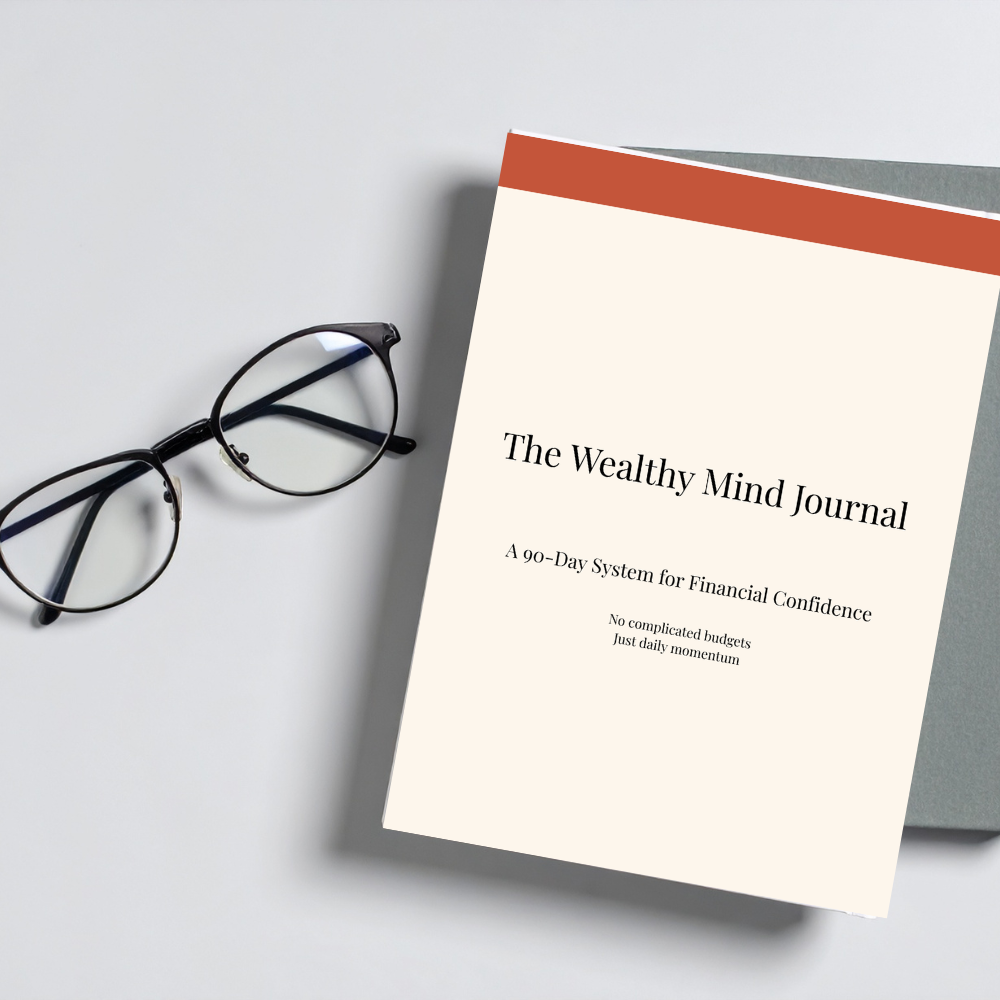
The Wealthy Mind Journal is a structured journaling practice designed to help you examine your money beliefs, track your financial goals, and build the daily habits of wealth-building — one entry at a time.
Get The Wealthy Mind Journal — $29
Free Tips
Get free tips on building side income
Practical strategies for busy professionals who want to earn more — delivered straight to your inbox.
Explore the full SideShelf collection
Browse All Products